
Categorization of Lifting Plans: ASME P30.1 vs. European Standards
Why Categorize Lifting Plans?
Categorization ensures that the level of engineering, supervision, and documentation matches the risk of the lift.
Without structured categories:
- Simple lifts may be over-engineered (inefficient)
- Complex lifts may be under-planned (dangerous)
Both ASME and European approaches aim to:
- Standardize risk assessment
- Define responsibilities
- Ensure appropriate controls are applied
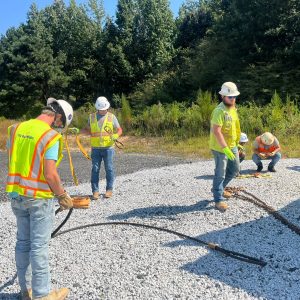
ASME P30.1: Lift Classification Framework
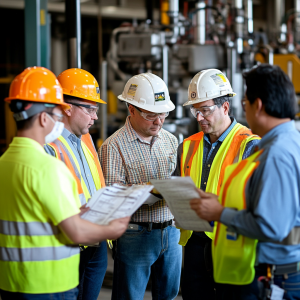
The ASME P30.1 provides guidance for lifting operations, including planning expectations. While it does not rigidly prescribe named categories like “Category 1, 2, 3,” it supports a risk-based classification approach widely adopted in industry.
Typical Industry Interpretation (Aligned with ASME Philosophy)
1. Ordinary (Routine) Lifts
- Repetitive, well-understood operations
- Standard rigging configurations
- No significant hazards
Examples:
- Loading/unloading materials
- Routine yard lifts
Requirements:
- Pre-use inspection
- Competent operator and rigger
- Basic lift planning (often informal)
2. Critical Lifts
Defined by increased risk or consequence.
Triggers may include:
- High load weight (e.g., >75–90% of crane capacity)
- Lifts over occupied areas
- Use of multiple cranes
- High-value or irreplaceable loads
Requirements:
- Documented lift plan
- Engineering review (if needed)
- Designated lift director
- Pre-lift meeting (toolbox talk)
3. Engineered Lifts
The highest level of complexity.
Characteristics:
- Non-standard rigging
- Complex load geometry or unknown center of gravity
- Tight tolerances or constrained environments
- Structural or stability concerns
Requirements:
- Formal engineered lift plan
- Calculations (load distribution, rigging forces)
- Drawings and lift simulations
- Approval by qualified engineer
European Approach (EN Standards & Industry Practice)
European standards such as EN 13000, along with guidance from organizations like FEM, follow a similar philosophy but often use more explicit categorization.
1. Basic (Standard) Lifts
- Low complexity
- Performed under normal operating conditions
Controls:
- Standard procedures
- Competent personnel
2. Complex Lifts
- Elevated risk or technical difficulty
Criteria may include:
- High percentage of crane capacity
- Limited space or visibility
- Proximity to hazards (power lines, structures)
Controls:
- Written lift plan
- Supervisor involvement
- Risk assessment (RAMS – Risk Assessment Method Statement)
3. Special / Critical Lifts
- Exceptional risk or non-standard conditions
Examples:
- Tandem lifts
- Lifts over live facilities
- нестable ground conditions
- Heavy lifts near crane limits
Controls:
- Detailed engineering analysis
- Method statements
- Permits and approvals
- On-site supervision by appointed person
Practical Alignment: Bridging Both Systems
In global projects, companies often harmonize both approaches:
Risk Level
ASME-Aligned Term
European Term
Typical Controls
Low
Medium
High
Ordinary lift
Critical Lift
Engineered Lift
Basic Lift
Complex Lift
Special Lift
Standard procedure
Written plan + review
Full engineering + approvals
At SmartLift, we support organizations in transforming lifting operations into structured, compliant, and predictable processes. From developing standard and critical lift procedures to delivering fully engineered lifting plans aligned with ASME and European standards, our team ensures that every lift is approached with the right level of planning, control, and expertise. Whether you need to strengthen your internal procedures, review high-risk lifts, or build a complete lifting governance framework, SmartLift provides the technical knowledge and practical solutions to help you execute lifts safely, efficiently, and with confidence.
BE SMART, LIFT PRO